1. Standard Oriya Keyboard Layout
High resolution image suitable for printing.
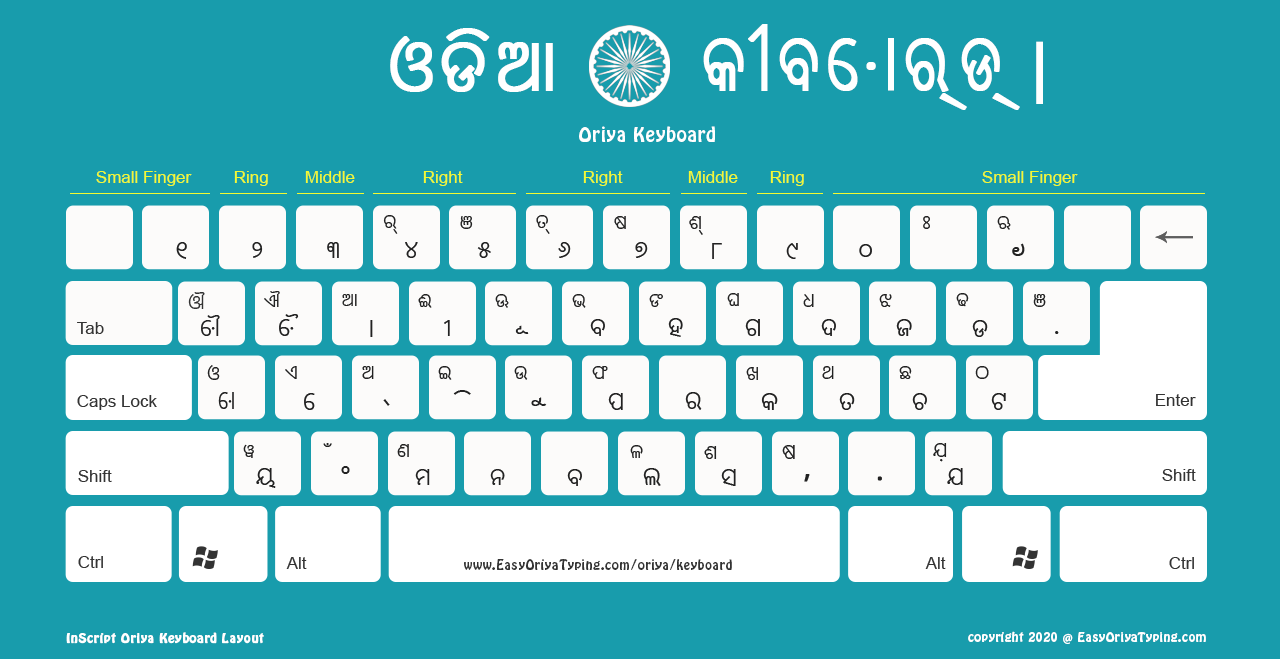
We have five different Oriya keyboard layouts for you to download on your computer. Once downloaded — you can use it as a reference to type in Oriya either on Word document or any other text editor. You also need to download the matching Oriya fonts.
High resolution image suitable for printing.
High resolution image suitable for printing.
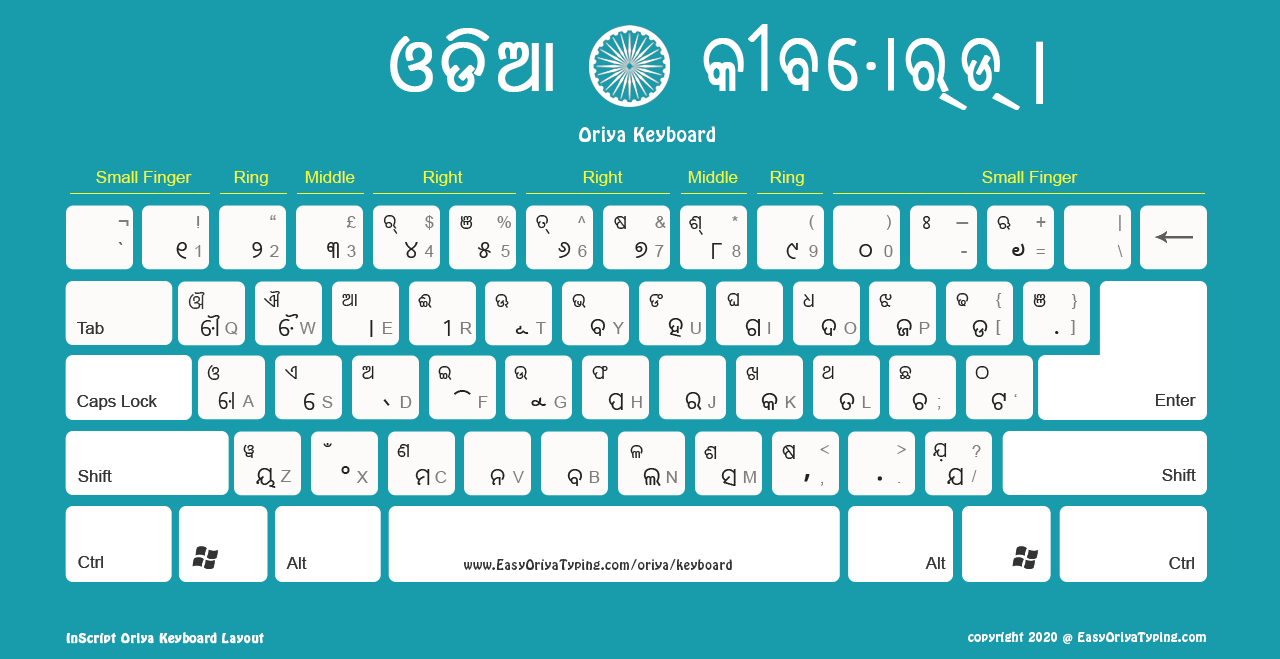
High resolution image suitable for printing.
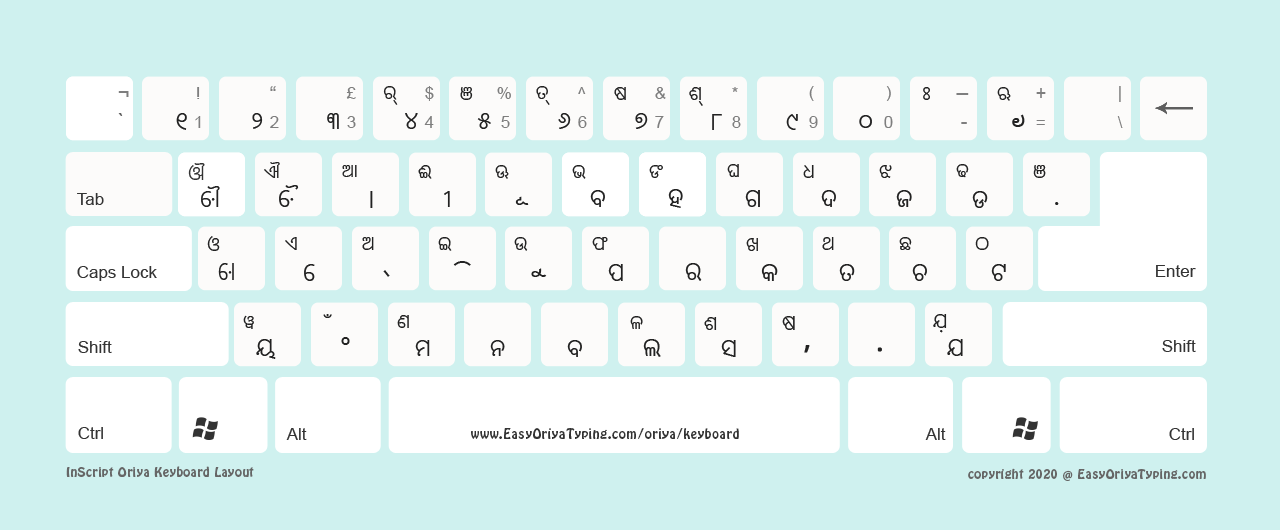
High resolution image suitable for printing.
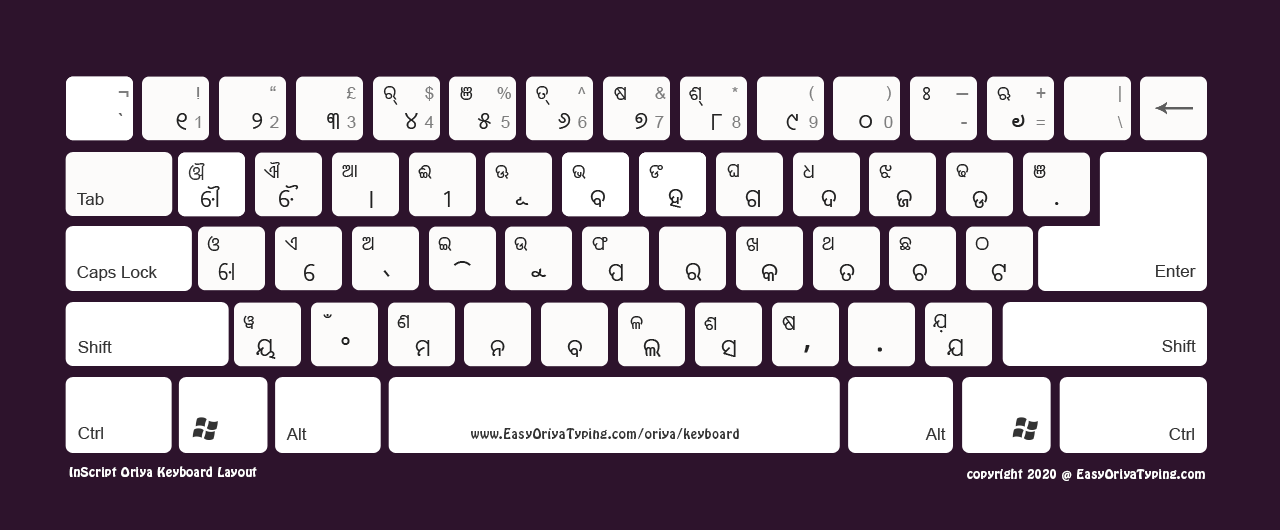
High resolution image suitable for printing.
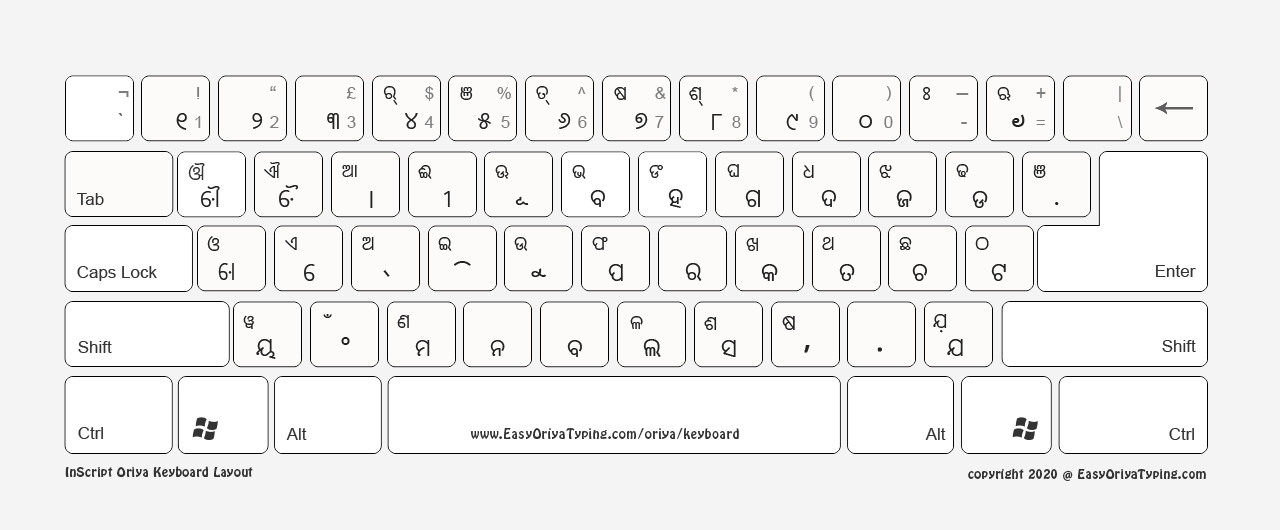
Getting started with Oriya typing is simple! Follow our step-by-step process.
Install Odia font — head over to our extensive fonts repository and install your preferred typeface.
Download your ideal keyboard image through this simple downloading process:
Browse and click on your preferred keyboard style
Right-click anywhere on the enlarged image
Choose "Save image as..." and pick your storage location
Prepare your writing space by launching your go-to text application and activating the Oriya font you installed in step one.
Begin your Oriya writing journey! Display your keyboard reference image alongside your text editor for seamless typing guidance.
Space-saving tip: Working on a compact setup? Our high-resolution keyboards deliver stunning print quality — create a physical reference that's always within reach!
Ensures traditional accuracy — each layout preserves authentic Oriya script conventions and cultural writing traditions.
Offers complete flexibility — choose from multiple styles and backgrounds to match your personal or professional preferences.
Includes unrestricted usage rights — download, print, share, and modify for any purpose without limitations or hidden costs.
You can access the full context of Hall's teachings on the human body and spiritual centers through these official and archival sources:
The pineal gland contains microscopic calcite crystals. Under pressure or vibration, these crystals can exhibit piezoelectricity, meaning they generate electric charges, potentially interacting with electromagnetic fields.
Websites like and the official Philosophical Research Society offer free, legal, and safely digitized copies of his manuscripts, complete with the intricate original illustrations mapping the pineal gland and the nervous system. Conclusion: The Ultimate Gateway
Manly Palmer Hall (1901–1990) was a Canadian-born author, lecturer, and mystic. He is best known for his 1928 masterpiece, The Secret Teachings of All Ages , an encyclopedic outline of Masonic, Hermetic, Qabbalistic, and Rosicrucian symbolical philosophy.
While Manly P. Hall approached the pineal gland from a symbolic and esoteric viewpoint, modern biochemistry provides a fascinating parallel.
Manly P. Hall's The Pineal Gland: The Eye of God explores the mystical significance of the "third eye," interpreting it as a dormant, spiritual, rather than just physical, organ of higher consciousness. Originally published within a larger 1932 work, this text delves into the gland's symbolism across ancient cultures as a bridge between human awareness and deeper spiritual realms. Amazon.com
The Ajna Chakra, or the third eye, is positioned between the eyebrows and represents the seat of intuition and divine wisdom.
The pineal gland, a small, pea-shaped endocrine gland located in the center of the brain, has long captivated the imagination of philosophers, theologians, and scientists. While modern biomedicine identifies it primarily for its production of melatonin and regulation of sleep cycles, esoteric traditions view it as something far more profound: the seat of the soul and the physical manifestation of the "Third Eye."
The Pineal Gland: The Eye of God and the Esoteric Anatomy of Manly P. Hall
 Sambhu Raj Singh ·