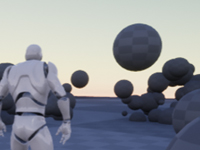
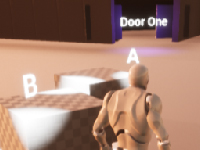
Active Stage Items
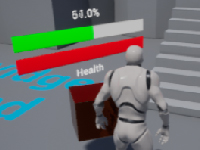
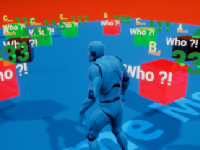
- Using widgets as health bar and changing it based on player collision in 3 methods
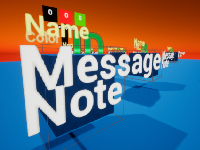
- Custom property of item on stage
- Blueprint only
Using:
collision detection, widgets, material parameters, timeline component, blueprint functions
Oracle Database 19c Administration Workshop Student Guide Pdf ^new^ | 2025-2027 |
Maps network service names to connect descriptors locally.
Setting up client-side name resolution via tnsnames.ora and sqlnet.ora .
The multitenant architecture is default in 19c. Pay close attention to commands requiring the ALTER SESSION SET CONTAINER clause and practice managing common users versus local PDB users.
The relationship between logical structures (data blocks, extents, segments, tablespaces) and physical files (data files, control files, online redo logs). 2. Installing and Creating the Database Maps network service names to connect descriptors locally
Completing this workshop is a strategic investment, recognized by Oracle and valued by employers globally. The pathway to is:
As an administrator, you will frequently need to extract, transport, and load data, as well as monitor the overall health of the database.
Bypasses local naming files using host string syntax. Pay close attention to commands requiring the ALTER
Recovering from standard failure scenarios, such as a lost multiplexed control file or a damaged non-SYSTEM datafile. How to Utilize Student Guides Effectively
How to configure the Oracle Listener to intercept incoming connection requests and route them appropriately using listener.ora and tnsnames.ora .
The workshop places heavy emphasis on , Oracle's native backup and recovery utility. Students learn to: Recovering from standard failure scenarios
One of the core highlights of the 19c curriculum is its in-depth focus on the . You'll learn how to create and manage Container Databases (CDBs) and Pluggable Databases (PDBs), which are a cornerstone of modern Oracle database consolidation and cloud strategies.
One of the most critical aspects of Oracle 19c is its Multitenant architecture. The student guide dedicates substantial space to helping you understand how to manage Pluggable Databases (PDBs) within a Container Database (CDB).
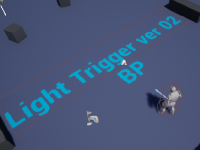
Blueprint and C++
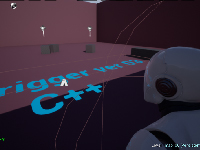
- Using collision scenarios, each as separate map with similar Blueprint and C++ approach
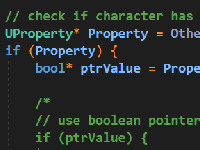
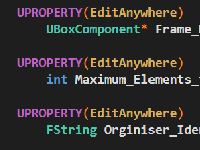
- Search and find properties on collision actor with C++
- 6 maps
- C++ and Blueprint
Using:
C++ : TFieldIterator, FindPropertyByName, ContainerPtrToValuePtr, SpotLightComponent, TextRenderComponent
Blueprint: TextRender, SpotLight
Levels
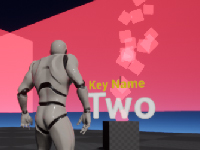
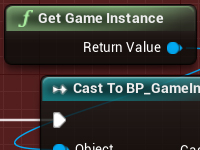
- Using GameInstance to save total score on map change (between levels)
- Using HUD class and communicate with GameMode on score/pick-item
- Display image and number of picked up items in widget (3 different items)
- Use Sequencer on change map
- Spawn Emitter
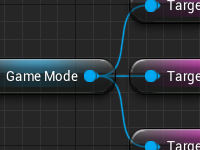
- GameMode communications on game logic and data flow
- Custom FBX object made by Blender and 3 imported images for widget
- Blueprint only
Using:
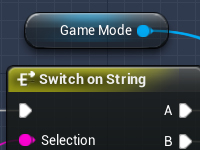
GameInstance, GameMode, HUD, Widget, Sequencer, Emitter, Collision detection, Map/Level change
Drag and Drop
- Drag and Drop by using F key
- Simple game prototype
- Communication with GameMode for game logics
- Blueprint only
Using:
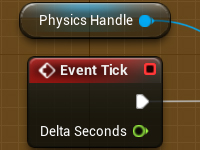
Drag and Drop functionality, Physic Handler, Widget, GameMode , Collision handling