nekopoimimk138liveactioniribitarigal7 new nekopoimimk138liveactioniribitarigal7 new
nekopoimimk138liveactioniribitarigal7 new Home News Planets Renderings Objects Drawings Tutorials nekopoimimk138liveactioniribitarigal7 new
The Sun Mercury Venus Earth Mars Jupiter Saturn Uranus Neptune Pluto

Nekopoimimk138liveactioniribitarigal7 New Official

Searching the string on X (formerly Twitter) or TikTok can sometimes reveal short clips, fan reviews, or announcements regarding the "live action" version.

Each broadcast follows a loose “ritual” template:

: Typically refers to a specific episode number, release code, or tracking catalog tag used by digital content archivers to organize long-running series. nekopoimimk138liveactioniribitarigal7 new

For specific subbed releases, relying on trusted, moderated community forums or verified subreddits is significantly safer than clicking on raw search engine results, which are often manipulated by SEO poisoning. Share public link

The camera flicked on to a warm, cramped room strewn with plush cats and string lights. A hand with chipped black nail polish tapped the mic. On screen, the username glowed: NekoPoim138 — Live. Searching the string on X (formerly Twitter) or

: This refers to the core title of the media piece. "Iribitari Gal" translates roughly to a story involving a "gal" (Gyaru—a prominent Japanese fashion subculture characterized by distinct makeup, hair, and expressive styles) who frequents or overstays her welcome at a specific location. The number "7" denotes the specific episode, volume, or chapter in the series.

Database transfers, broken API endpoints, or automated web scraping scripts sometimes leak into searchable index files. When search engine crawlers find these raw tracking scripts or database configurations, they list them as indexed text, creating a phantom footprint. 3. Phishing and Malicious Redirects Share public link The camera flicked on to

If you are looking for a specific platform to watch this on or need to know the release date for a particular region, could you share a bit more about the type of media it is (e.g., a specific show or a fan project)?

Gal (ギャル) refers to a Japanese subculture of tanned, blonde-haired, fashion-forward girls often featured in anime like Gyaru and Dinosaur or My Girlfriend is a Gal . The keyword "Iribitarigal" might be a misspelling of Iribitari Gal (possibly a character from the doujin Haitoku no Iribitari ).

The phrase represents a highly specific, algorithmic string of search terms often tied to underground streaming communities, specific video file indicators, and automated SEO content aggregation.

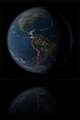
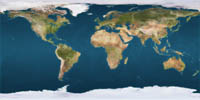
This map is a synthesis between my original earth map, gradient mapping of the USGS DEM information, hand painting, DEM modulation of detail, bathyspheric depth information, and the USGS Ocean clip. Bathyspheric data was used to modulate the color of the water so that deeper areas are a darker blue than shallow areas.
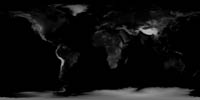
This is pieced together exclusively from the USGS DEM database. It contains landmass elevations only, with the ocean at zero, and the top of Mt. Everest at 255. Use this as a bump map to give the appearance of the Earth's rugged surface features. Some madmen have also used this data in POV Ray as a displacement map on a very finely divided sphere to produce a "true" 3D version of the Earth. The 10K version is VERY large, so make sure you really need that much detail.
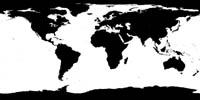
This is derived from USGS DEM data, with the addition of the Arctic ice areas which do not show up on USGS data (since they are not solid land masses.) Use this to control specularity and reflectance of the ocean surface.
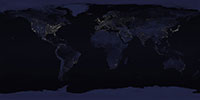
1024 x 512 color image. Very similar to the night lights map as published by NASA on their Blue Marble Page. I took their 30000 x 15000 black and white city lights map, and adapted it with a color table to a colorized version of my earth color map. This comes in 2k, 4k, and 10k versions in color, as opposed to the maximum 2k size of the NASA version of this map (higher resolution versions are available on the paid page only because of their size). Be sure to have a look at the tutorials page for a special rendering tip for using this map.
1024 x 512 color image. Based on a mosaic of satellite data, colorized, data errors retouched out, and fixed for seamless wrapping.
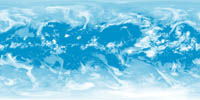
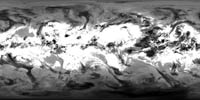
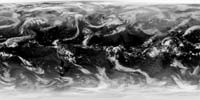
1024 x 512 greyscale image. Based on the same data as the color map, but leveled for the purpose of transparency mapping.

4096 x 2048 greyscale image. Built up out of real satellite imagery based upon a tutorial Dean Scott of Silicon Magic has posted. This is posted in JPEG2000 format. You need a special Photoshop plug-in to make use of jp2 images. I've thoughtfully provided a link:

JPEG 2000 Plugin from Fnord.

Nekopoimimk138liveactioniribitarigal7 New Official

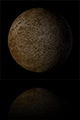
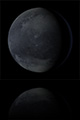
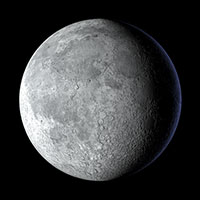
The Moon is a tricky planetoid to render. It has a very distinctive albedo which remains constant across its lit side, regardless of the angle of the surface to the sun. Therefore, standard rendering lighting models do not apply, as they always have a characteristic drop off in intensity as the angle of incidence to the light source increases. In Lightwave, there is an option to use a "non-Lambertian" lighting model on a surface setting. In previous versions of Cinema4D, you had a contrast control in the lighting setup. More recent versions of Cinema4D feature an Oren/Nayar illumination model in the lighting setup which allows you to simulate the lighting properties of "rough" surfaces. This is the method I used on the same pictured here.

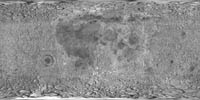
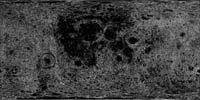
This map is based on a mosaic of satellite data, retouched for visible mosaic seams and for problems with the wrapping seam. Since this image contains highlight and shadow information independent of the location of your light source (inevitable because of how the moon is illuminated by the sun), you'll need to be careful how you light this so you don't break the illusion.

This map is my attempt to derive bump information from the above map. I did a high-pass filter operation to find all the edges of the craters, and then curved the result so that blacks and whites were white, and mid-tones were black. The results came out pretty well, as you can see from the sample image above.


this site works
best on Firefox:


website design © 2006 james hastings-trew