|
||||||
|

Kinect System requirements
You need to read the system requirements on microsoft.com (http://www.microsoft.com/en-us/kinectforwindows/) we are currently using the "Kinect for Windows" sensor (NOT v2) and hence those are the system requirements you need to look up (search on "Kinect for Windows v1.8" or go to currently http://www.microsoft.com/en-us/download/details.aspx?id=40278)
Kinect Sensor for Windows (not V.2)
Search or currently go to http://msdn.microsoft.com/en-us/library/hh855355.aspx
Kinect SW setup
Visual Studio .NET, C#, and Kinect -
STEP 1 Download latest Visual Studio with C# support from Microsoft Dreamspark (you must make an account, and get verified as student, easy but, follow directions)
STEP 2: read Microsoft Kinect Getting Started (for version 1.8) ( this will reference how to a) dowload SDK, runtime tools and setup your sensor)
Kinect Developer Site (and SW)
Developer site (note we will use kinect for windows and 1.8 version of sdk and runtime)
NOTE: currently using pervious version v 1.8 of kinect for windows sensor (not v2).
STEP 2.1 So download latest SDK 1.8 that supports that sensor
STEP 2.2 Download the corresponding runtime tools
STEP 2.3 Setup your sensor
STEP 2.4 Download the corresponding developer toolkit (this includes nice apps like Kinect Studio, again version 1.8). Make sure that you have installed the Kinect studio --this is a useful app. You will bring up a Kinect Developer Toolkit browser by going to via the start menu: Kinect for Windows SDK 1.8 -> Developer Toolkit Browser v1.8 (i.e. this might lead to the folder location of C:\ProgramData\Microsoft\Windows\Start Menu\Programs\Kinect for Windows SDK v1.8)
STEP 4: optional dowload the appropriate Microsoft Speech Platform SDK for your Kinect device (version 11 currently see URL http://www.microsoft.com/en-us/download/confirmation.aspx?id=27226) if you want to do any Speech API using Kinect.
STEP 5: Play with Kinect studio
STEP 6: Try to create using book or online tutorial a beginning Kinect application ( we will be doing in C#).
To create a C# application you need to have the following
Mifare Classic Card Recovery Tools Beta V0 1 Zipl [repack] -
The first step is always identifying the card. The tool can detect various MIFARE Classic variants (1K, 4K) and other compatible chips. It then scans the card, reading metadata and determining its structure before attempting to read the encrypted data.
Basic familiarity with MIFARE Classic technology and raw hexadecimal data. Google Play
Mifare Classic cards have been subject to various security analyses and have been found to have vulnerabilities. One of the most notable was the work by researchers at the University of Amsterdam, which demonstrated that the Mifare Classic's encryption could be broken, allowing for the cloning of cards. This research led to an increased awareness of the card's vulnerabilities and the need for more secure alternatives.
Instead of untrusted beta files, the standard open-source toolkit for recovery and testing includes: Recover Mifare Classic key from authentication trace mifare classic card recovery tools beta v0 1 zipl
⚠️ This software is for authorized testing only . Do not use on cards you do not own or have explicit permission to assess.
The is a utility designed for interacting with MIFARE Classic RFID cards, often packaged in a zip or exe format for Windows users. This specific version is part of a broader category of low-level tools used to read, write, and analyze the memory structure of these cards. Key Features and Capabilities
: While the manufacturer block (Block 0) of standard cards is read-only, the tool can write to special "magic" tags (Gen2) to create exact clones. Security Warning The first step is always identifying the card
The most common hardware paired with early tools was the NXP PN532 NFC chip, often found in affordable USB dongles or development boards.
This tool exploits the known 48-bit key vulnerability of Mifare Classic. Alternatives to the Beta Tool
A typical beta recovery toolkit from this era was structured around several open-source pillars: Basic familiarity with MIFARE Classic technology and raw
[+] Sector 00 Key A: FFFFFFFFFFFF [+] Sector 00 Key B: A0A1A2A3A4A5 [+] Sector 01 Key A: (unknown) [-] Sector 01 attack failed – try hardnested
For general NFC tag management.
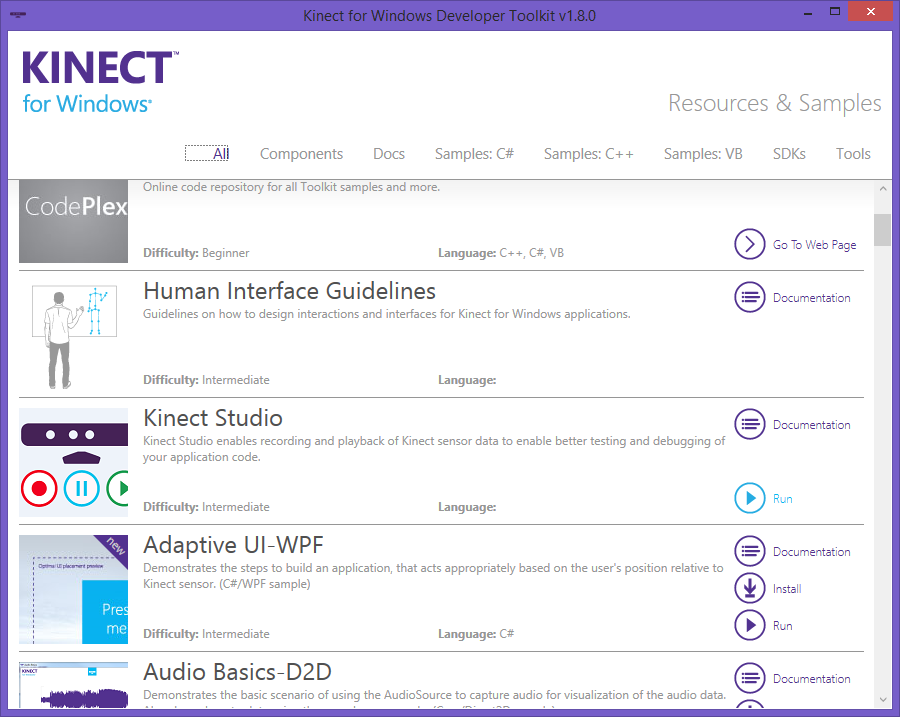
Kinect Studio
This tool lets you record data on your Kinect Studio associated with a Kinect application that is running and then save as an .XED file and play this back anytime you want through the same application as long as you have the same sensor running with it (this is because it needs the same calibration information stored with sensor).